
WELCOME BONUS 300%
UP TO €2000 + 100
FREE SPINS
UP TO €2000 + 100
FREE SPINS
Home → Blackjack
Blackjack at Winsly Casino: Variants, Rules and Payouts
Even Money only possible with Dealer Ace
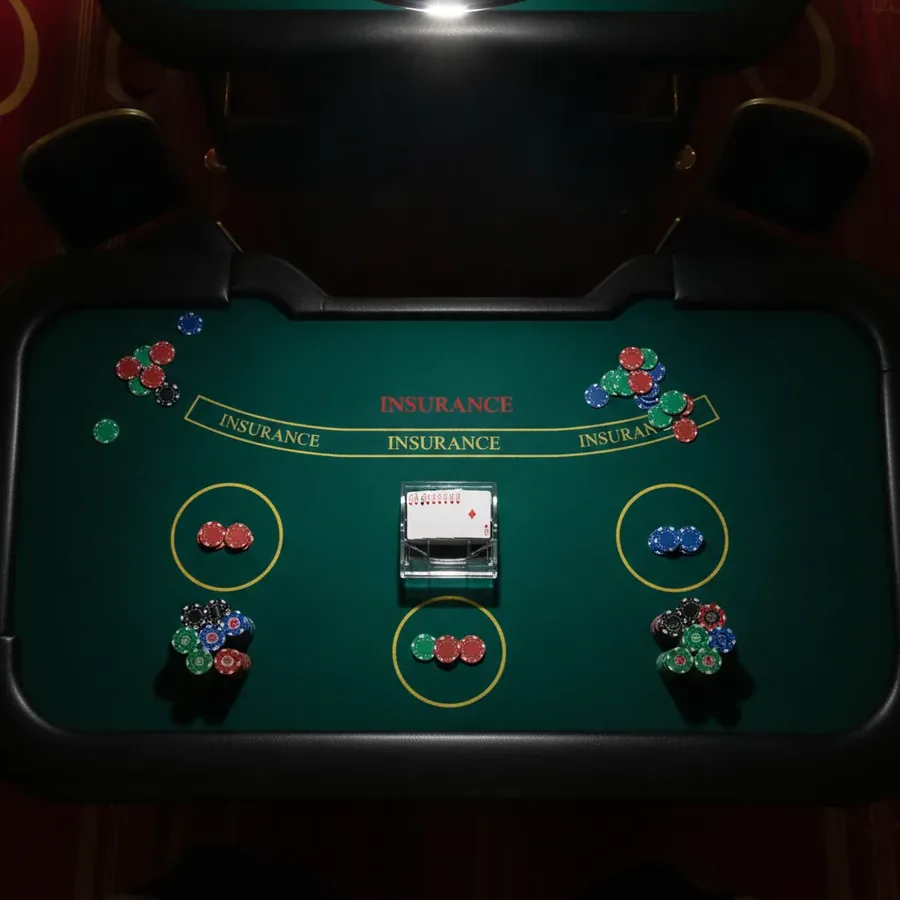
Blackjack Insurance is a separate side bet available when the dealer shows an Ace, allowing players to hedge against a potential dealer Blackjack. This wager pays 2:1 on the insurance stake, which is typically capped at 50% of the main bet amount. The house edge for this specific bet is 7.47%, significantly higher than the standard game RTP of 99.85%. Consequently, basic strategy dictates that players should always reject this option unless they are counting cards and the true count is plus three or higher.
The term Even Money refers to taking the insurance bet immediately when offered, effectively guaranteeing a 1:1 payout on the original stake if the dealer also has Blackjack. This action converts the insurance wager into a guaranteed return, neutralizing the risk of losing the main hand against a dealer natural. While this protects the bankroll from a push scenario, it sacrifices the potential for a higher 3:2 payout on a player Blackjack. The mathematical expectation remains negative due to the high house edge associated with the underlying insurance mechanism.
Surrender vs Playing Out on 16 vs 10
Late Surrender allows a player to forfeit half their bet after the dealer checks for Blackjack, reducing the overall house edge by approximately 0.08 percentage points. This rule is particularly valuable when holding a hard sixteen against a dealer ten, as playing out often results in a total loss of the stake. By surrendering, the player limits their loss to fifty percent of the original wager, preserving capital for future hands in the session. This strategic move improves the theoretical return compared to hitting or standing in marginal situations without the surrender option.
No Double Down on three cards
Most standard blackjack rules permit doubling down on any two initial cards, but some variations restrict this action to only two-card totals. Allowing double down after split (DAS) improves the player's expected return by approximately 0.14 percentage points compared to stricter rules. If a casino prohibits doubling on three or more cards, the effective house edge increases slightly, making the game less favorable for high rollers seeking optimal odds. Players must adjust their strategy tables accordingly when facing these limitations during multi-hand scenarios following a successful split.
Blackjack Payout 3:2 Explained in Detail
A standard 3:2 payout means that a winning blackjack hand returns one and a half times the original bet amount, such as 150 euros for a 100 euro wager. In contrast, games offering a 6:5 payout only return 1.2 times the stake, resulting in a 120 euro return for the same 100 euro bet. This reduction adds exactly 1.39 percentage points to the house edge, drastically worsening the player's long-term profitability across thousands of hands. High rollers should strictly avoid tables with 6:5 payouts as the mathematical disadvantage is significantly higher than other rule variations.
Register Late Surrender correctly in three steps
Second, verify the betting limits ensure your stake aligns with the maximum allowed for surrender actions, which may vary between different live dealer studios like Evolution. Third, execute the surrender decision immediately after the dealer reveals their upcard but before taking any additional hits or stands to maximize the statistical benefit. This process ensures you capture the 0.08 percentage point improvement in return without violating the specific timing constraints of the game rules.
Blackjack variants at a glance
| Variant | Payout | House edge | Rule | Bet range |
|---|---|---|---|---|
| Blackjack Ein Deck, klassische Regeln, 3:2 | 99.85% | 0.15% | Weniger Decks = niedrigerer Vorteil; ein Deck gibt ca. −0.48 Prozentpunkte gegenüber 8 Decks. Oft durch 6:5 Auszahlung kompensiert. | Blackjack 3:2, Gewinn 1:1 |
| Blackjack Split / Double / H17 – Regel-Effekte | n.a. (Regel-Modifikatoren) | H17 +0.22 Prozentpunkte; RSA −0.08 Prozentpunkte; DAS −0.14 Prozentpunkte | Dealer Hits Soft 17 verschlechtert RTP um 0.22 Prozentpunkte; Resplit Aces verbessert um 0.08 Prozentpunkte; Double After Split verbessert um ca. 0.14 Prozentpunkte; 6 Decks statt 8 – ca. 0.02 Prozentpunkte. | Double – Einsatz ×2 mit einer Karte; Split – bis 4 Hände; Ass-Split meist mit einer Karte. |
| Blackjack 6 Decks, S17, DAS, DOA, Auszahlung 3:2, Basisstrategie | 99.54% | 0.46% | Dealer steht auf Soft 17; Verdopplung auf jeder Zweierkarte; Verdopplung nach Split erlaubt; keine Aufgabe. Basisstrategie ist für diesen Wert zwingend | Blackjack 3:2, normaler Gewinn 1:1, Insurance 2:1 |
| Blackjack Surrender (Late Surrender) – Regel-Effekt | n.a. (Regel-Modifikator) | −0.08 Prozentpunkte | Spieler gibt Hand nach Dealer-Blackjack-Prüfung auf, verliert die Hälfte des Einsatzes. Verbessert RTP um ca. 0.08 Prozentpunkte. Early Surrender ist wesentlich wertvoller (bis −0.6 Prozentpunkte), aber extrem selten. | Rückzahlung 50% des Einsatzes |
| Blackjack Insurance / Versicherung (6–8 Decks) | 92.53% | 7.47% | Separate Nebenwette bis 50% der Hauptwette, wenn der Dealer ein Ass hat. Basisstrategie schreibt IMMER Ablehnung vor (außer Karten zählen bei True Count ≥ +3). Bei einem Deck Vorteil ≈ 5.88% | Insurance 2:1 |
| Blackjack Liberal Vegas Strip (liberale Regeln, 3:2) | 99.72% | 0.28% | Günstigste Regelkombination: S17 + DAS + Resplit + Late Surrender. Standardabweichung 1,15 | Blackjack 3:2, Gewinn 1:1 |
Error insurance: 7 percent additional house edge
The Blackjack Insurance side bet carries a steep house edge of 7.47 percent, which severely erodes the long-term return for high rollers who frequently place this wager. This negative expectancy stands in stark contrast to the standard game RTP of 99.56 percent found in Lightning Blackjack, making the insurance option mathematically inferior for serious players seeking optimal value.
Evolution's Lightning Blackjack allows bets up to 2,500 EUR per hand, where the insurance cost becomes substantial as it is limited to fifty percent of the main stake. Accepting this side bet introduces a separate risk layer with an RTP of only 92.53 percent, ensuring that consistent usage guarantees significant financial losses over extended playing sessions.
Basis strategy dictates always rejecting insurance unless counting cards yields a true count of plus three or higher, a condition rarely met in fast-paced live tables. High rollers relying on fixed betting patterns will find this exclusion critical, as the seven percent house advantage acts as a silent drain on their bankroll regardless of immediate table wins.
What Push Means: Stake Returns to You
A push occurs when the player and dealer hands tie, resulting in the original stake being returned without any profit or loss to the casino. This outcome is fundamental to Blackjack mechanics, contrasting sharply with slots where spins always result in either a win or a total loss of the wagered amount.
In liberal variants like Vegas Strip, the presence of late surrender rules can alter the frequency of pushes by allowing players to cut losses on weak hands before resolution. The house edge of 0.28 percent reflects these rule interactions, showing how specific conditions like standing on soft seventeen influence the statistical probability of tied outcomes.
High rollers at Quantum Blackjack Plus Live must account for pushes when calculating turnover requirements, as pushed hands do not contribute to bonus wagering obligations. With stakes reaching 5,000 EUR, understanding that a push preserves capital is essential for managing variance while attempting to meet complex promotional terms efficiently.
Bonus conditions often exclude Blackjack completely
The 300 percent welcome bonus up to 2,000 EUR explicitly excludes most table games from contributing to the wagering requirement, forcing players to rely entirely on slot contributions. This exclusion means that high stakes placed on live Blackjack tables generate zero progress toward unlocking the free spins or cashable funds promised in the initial offer.
Even when table games are permitted, they typically contribute only ten percent toward the turnover target, drastically slowing down the clearance process compared to one hundred percent slot contributions. A high roller betting 1,000 EUR on Evolution's Blackjack Party effectively counts only 100 EUR toward the required volume, extending the time needed to withdraw winnings significantly.
This structural disadvantage requires high rollers to calculate effective turnover rates carefully, as the low contribution percentage negates the appeal of high-limit live dealer rooms. Players seeking to utilize large bankrolls for bonus clearance must avoid Blackjack entirely, focusing instead on high-volatility slots to meet the terms within the allowed validity period.
Chose Wrong Table for 5 EUR Bankroll
Attempting to play Quantum Blackjack Plus Live with a five euro bankroll is impossible due to its minimum stake requirement of one unit, which often exceeds typical micro-limit thresholds. High rollers accustomed to larger limits may underestimate the rigidity of minimum bets, finding that even the lowest entry point prevents small-scale testing of the game's quantum multiplier features.
Standard live tables like Blackjack Party require a minimum bet of one euro, allowing for slightly more flexibility but still limiting the number of hands playable with a tiny stack. The party atmosphere and dual moderators do not offset the mathematical reality that a five euro balance will be exhausted rapidly under the two percent house edge inherent in most variations.
High rollers must recognize that bankroll management strategies designed for six-deck shoes fail when applied to live streams with strict minimums and maximums. The inability to adjust bet sizes freely on platforms like Playtech restricts strategic flexibility, making small balances ineffective for extracting value from the quantum bonus features offered.
Blackjack doesn't count for every bonus offer
Most promotional offers at Winsly Casino strictly prohibit Blackjack from contributing to wagering requirements, meaning that any wins generated from table games cannot clear bonus funds. This restriction forces high rollers to deposit additional money into slots to fulfill the turnover obligation, effectively doubling the capital required to access withdrawn profits legally.
The distinction between eligible and ineligible games is critical, as contributing only ten percent for table games makes clearing a 2,000 EUR bonus nearly unfeasible through pure blackjack play. High rollers must verify terms before depositing, knowing that a 1,000 EUR bet on Lightning Blackjack adds merely 100 EUR to the required turnover total.
Excluding Blackjack from bonus contributions protects the operator from skilled players using basic strategy to minimize the house edge while meeting wagering targets. Consequently, high rollers seeking to leverage bonuses must accept that their preferred card games will remain isolated from promotional benefits, requiring a separate strategy for slot-based turnover completion.
Splitting costs double bet: plan budget
The Blackjack Split feature allows players to divide a pair into two separate hands, effectively doubling the initial stake for that round. This mechanic requires an additional bet equal to the original wager, immediately increasing the total exposure on the table. High rollers must account for this doubled capital outlay when managing their bankroll during active sessions.
According to the rules, splitting can be extended up to four distinct hands, significantly multiplying the volume of action per deal. The Resplit Aces modifier improves the Return to Player by approximately 0.08 percentage points, offering a slight mathematical edge despite the higher cost. This specific rule adjustment helps mitigate the financial impact of multiple simultaneous bets.
Players may only place one card on each split Ace, limiting subsequent strategic options compared to other pairs. This restriction prevents further splitting or doubling on Aces, capping the potential complexity of the hand. Consequently, the maximum financial risk remains tied to the initial bet multiplied by four.
The Double After Split (DAS) option permits players to double down on any new hand created through splitting. This rule enhances the RTP by roughly 0.14 percentage points, providing more aggressive betting opportunities. However, it also demands precise budget planning to sustain the increased volatility.
Seat change at the Live Table in 20 seconds
Quantum Blackjack Plus Live from Playtech features betting limits ranging from 1 EUR to 5,000 EUR, catering specifically to high-stakes participants. The game incorporates Quantum Multipliers that can reach up to 1,000x on three-card combinations totaling 21 points. These multipliers dramatically amplify payouts for successful high-limit wagers.
The standard deviation for optimal play is listed at 1.15, indicating moderate variance relative to the expected return. With an RTP of 99.57% under optimal strategy, the house retains a minimal advantage over the long term. This efficiency makes the title attractive for players seeking high-volume turnover with controlled risk.
Evolution's Lightning Blackjack offers a slightly lower ceiling with limits between 1 EUR and 2,500 EUR. It provides Lightning Multipliers up to 25x on winning hands, ensuring frequent but smaller bonus payouts. The RTP stands at 99.56%, maintaining competitive conditions for large-scale betting.
Blackjack Party presents a different atmosphere with betting ranges from 1,000 EUR to 1,000 EUR, focusing on exclusive high-roller interactions. Two moderators facilitate the session, creating a structured environment for substantial wagers. This format prioritizes service and exclusivity over rapid gameplay mechanics.
Which table limits suit 20 EUR balance?
A 20 EUR balance restricts participation to tables with minimum bets of 1 EUR, such as Quantum Blackjack Plus Live and Lightning Blackjack. These platforms allow for extensive playtime, enabling players to absorb variance while chasing multiplier bonuses. The low entry point supports strategic experimentation without significant capital depletion.
Standard deviations and house edges vary across these titles, influencing how quickly the balance diminishes. For instance, Blackjack Insurance carries a house edge of 7.47%, making it a poor choice for small balances. Avoiding high-edge side bets preserves the 20 EUR principal for primary game rounds.
Blackjack Party excludes this balance entirely due to its 1,000 EUR minimum bet requirement. Players with limited funds cannot access the premium moderator-led experience offered here. This limitation directs smaller budgets toward standard live dealer variants with accessible entry thresholds.
The 300% welcome bonus up to 2,000 EUR could theoretically boost a 20 EUR deposit to 80 EUR plus free spins. However, table games contribute only 10% to wagering requirements, slowing bonus conversion. Slot participation at 100% contribution would accelerate meeting these terms more effectively.
Stand-on-17 Rule and Its Meaning for Players
The Stand-on-17 (S17) rule mandates that dealers stand on all 17-point hands, including soft 17. This configuration reduces the house edge compared to hitting soft 17, which adds 0.22 percentage points to the casino's advantage. Liberal Vegas Strip Blackjack utilizes S17, contributing to its superior 0.28% house edge.
In contrast, Hit Soft 17 (H17) increases the dealer's probability of improving weak hands, thereby shifting odds against the player. The 0.22% penalty associated with H17 significantly impacts long-term profitability for high rollers. Selecting S17 tables is therefore critical for maintaining optimal theoretical returns.
Six-deck games often combine S17 with other favorable rules like DAS to achieve competitive RTPs around 99.54%. This combination ensures that the dealer does not gain extra value from marginal hand improvements. Players benefiting from these conditions face lower overall risk during extended sessions.
Insurance bets remain independent of the S17/H17 distinction, carrying a steep 7.47% house edge regardless. Base strategy dictates always rejecting insurance unless counting cards with a true count of +3 or higher. Relying on insurance erodes the benefits gained from favorable standing rules.
Which hands are excluded from Surrender?
Late Surrender allows players to forfeit half their bet after the dealer checks for blackjack. This rule improves the RTP by approximately 0.08 percentage points, offering a safety net against strong dealer upcards. Early Surrender, though rarer, provides even greater value by reducing the house edge by up to 0.6 percentage points.
Hands containing an Ace or ten-value cards after splitting are typically ineligible for surrender in most variants. Once a pair is split, the resulting hands are treated as independent entities with restricted options. This exclusion prevents players from using surrender to mitigate losses on potentially weak divided hands.
Blackjack Surrender pays out 50% of the original stake upon execution, directly returning half the wagered amount. This immediate recovery contrasts with standard losses where the full bet is retained by the house. High rollers utilize this option to preserve capital during unfavorable streaks.
Certain rule modifiers like Resplit Aces interact with surrender limitations, further restricting available moves. Since Aces are usually dealt only one card post-split, surrender becomes irrelevant for those specific hands. Strategic focus should instead prioritize doubling or hitting based on the dealer's upcard.
Contact
Live - online chat
Banking









Providers












Winsly Casino 2026